
Rafting in Pokhara
Rafting in Pokhara means the Upper Seti River, a short, adrenaline-heavy stretch that fits into half a day without cutting into the rest of your itinerary. From our Lakeside office, Mary Adventure Tours arranges river rafting trips with a licensed guide steering the raft and giving instructions throughout the journey.
Travelers with more time can also choose a longer, gentler multi-day journey from Pokhara toward Chitwan on the Lower Seti River. This is a very different experience from the half-day Upper Seti trip, with calmer water and a longer route.
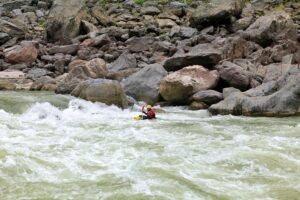
Upper Seti River: The Half-Day Rafting Adventure
The Upper Seti is what most people mean by a rafting adventure in Pokhara a roughly 30-minute drive from Lakeside to the put-in point, followed by close to an hour of continuous, genuinely exciting rapids. It’s shorter than rafting trips elsewhere in Nepal, but it packs a real adrenaline hit into a manageable half-day window, making it easy to combine with other adventure activities such as paragliding or hiking on the same trip.
No previous rafting experience is required. Your guide gives you a safety briefing and paddling instructions before you launch, then steers the raft through the rapids while the group paddles together.
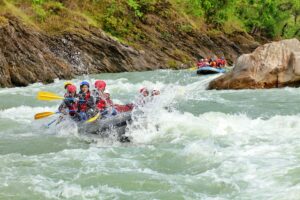
Upper Seti Rafting at a Glance
⏱ Duration
Half-day rafting experience
🚐 Drive from Lakeside
Around 30 minutes to the put-in point
🌊 Rafting Time
Close to 1 hour of continuous rapids
🎯 Experience Level
Suitable for beginners with guide support
What to expect
From Lakeside, you’ll travel to the Upper Seti River, where your guide provides a safety briefing and basic paddling instructions before you launch. Once on the water, the group spends around an hour navigating the rapids with an experienced guide. The combination of exciting whitewater, mountain surroundings, and a short time commitment makes Upper Seti rafting a practical choice for travelers who want an adventure without giving up an entire day.
Pokhara Rafting Difficulty Level
Rafting difficulty in Pokhara varies by river section. The Upper Seti generally falls in the Class III to Class IV range, with continuous rapids that make the trip genuinely exciting; prior whitewater experience isn't necessarily required when you're accompanied by a licensed guide. By comparison, the Lower Seti route toward Chitwan is calmer, around Class II–III, making it a better option for families and first-timers who prefer scenery and a more relaxed experience.
If you're looking for extreme river rafting in Pokhara rather than a relaxed float, the Upper Seti's shorter, punchier rapids are the better fit. For families or less experienced paddlers, the Lower Seti offers a gentler introduction to whitewater and is worth asking about.
Adrenaline & action
Scenery & a relaxed trip
Which Route Is Right for You?
Want more action?
Choose the Upper Seti for stronger rapids and a more energetic rafting experience close to Pokhara.
Prefer a relaxed adventure?
Ask about the Lower Seti route toward Chitwan if you want calmer water, more scenery, and a less intense experience.
Traveling with family?
The Lower Seti may be a better fit for families and travelers who prefer a gentler introduction to whitewater rafting.
Safety note:
River conditions and rapid classifications can vary with water levels and season. Your rafting operator and guide should make the final assessment of whether conditions are suitable on the day.
Is Rafting in Pokhara Dangerous?
Rafting in Pokhara, like any whitewater activity, carries some inherent risk. Licensed operators use trained guides, safety equipment such as life jackets and helmets, and rafts suited to the river’s rapid class. Because the Upper Seti reaches Class III–IV, the experience is more intense than a beginner float, so tell your guide about your comfort level and swimming ability before you launch.
Seasonal changes can affect water levels and river conditions. A responsible Pokhara rafting company will adjust or reschedule a trip when conditions are considered unsafe rather than operate regardless of the weather.
TRAINED GUIDES
Trips are led by trained guides who manage the rafting experience and help participants navigate the river.
SAFETY EQUIPMENT
Life jackets and helmets are used as part of the standard rafting safety setup.
SUITABLE RAFTS
Rafts are selected according to the river and its rapid class.
The Upper Seti's Class III–IV water is more intense than a beginner float. It's worth being honest with your guide about your comfort level and swimming ability before you launch.
Adventure Tourism in Nepal
Rafting and other adventure tourism activities in Nepal fall under the broader oversight of the Nepal Tourism Board , alongside river-specific safety standards set by individual operators.
Rafting From Pokhara to Chitwan

The Rafting journey from Pokhara to Chitwan offers a different kind of experience. This multi-day trip follows the Lower Seti River and doubles as transport between the two destinations, rather than serving as a standalone half-day activity. Instead of a long bus ride, you spend two to three days on calmer Class II–III water, camping riverside along the way, before arriving near Chitwan National Park.
This is a genuinely different product from the half-day Upper Seti trip, and not something every operator runs the same way if this multi-day route interests you, mention it specifically when you get in touch, since it needs to be planned into your itinerary well ahead of a standard day trip.
Best Time for Rafting in Pokhara
Rafting conditions in Pokhara vary considerably throughout the year. Water levels, weather, and your preferred experience all affect which period is most suitable for a trip
🍂 Peak Season
September – NovemberClearer weather and strong water levels create good conditions for rafting, with exciting rapids without the extreme flooding associated with the monsoon.
🌸 Spring & Early Summer
March – JuneAnother good period for rafting, with water levels generally suitable for enjoyable rapids before the monsoon arrives.
❄️ Winter & Monsoon
December – February & June – AugustWinter brings colder water and may be less comfortable without a wetsuit. During the monsoon, substantially higher river levels can make trips unsafe or unavailable depending on conditions.
💡 Planning Tip: If rafting is a priority for your trip, it's worth checking current rafting conditions in Pokhara with us rather than assuming every month offers the same experience.
How to Book
Start by contacting us with your preferred dates and rafting option. We'll then check current river conditions and availability before arranging the remaining details.
Contact us with your preferred dates and whether you want the half-day Upper Seti trip or the multi-day Chitwan route.
We check current water conditions and confirm availability with our rafting company partners in Pokhara.
We arrange pickup from your hotel or our Lakeside office.
You raft, with a licensed guide steering and briefing you throughout.
If you're combining rafting with a trek or other activities, let us know your full schedule so we can sequence bookings around weather-dependent days.
frequently asked question
How difficult is rafting in Pokhara?
The Upper Seti River, the standard half-day option, generally runs Class III to Class IV rapids — exciting but manageable with a licensed guide and no prior experience required. The multi-day Lower Seti route to Chitwan is gentler, around Class II–III.
Is rafting in Pokhara dangerous?
It carries the inherent risk of any whitewater activity, but licensed operators use trained guides and proper safety gear. Being honest about your swimming ability and comfort level with your guide beforehand matters more than any single safety measure.
Can I raft from Pokhara to Chitwan?
Yes — this is a genuinely different, multi-day trip on the Lower Seti River rather than the standard half-day Upper Seti rafting adventure. It needs to be planned into your itinerary ahead of time, so mention it specifically when booking.
What's the best time of year for rafting in Pokhara?
Roughly September to November and March to June offer the best combination of water levels and comfort. Monsoon season (June–August) can make river conditions unsafe, and December–February brings colder water.
Do I need rafting experience to go on the Upper Seti River?
No. Your guide gives a full safety briefing and paddling instructions before you launch, and steers the raft through the rapids with the group.
Ready for the River?
Rafting in Pokhara packs a genuine adrenaline rush into half a day on the Upper Seti River, or, if you have more time, becomes a memorable multi-day journey toward Chitwan on calmer water. Get in touch with your dates and which trip interests you, and we’ll confirm current conditions and pricing.